Agentic SEO is the execution model for modern search, where visibility no longer lives in one place. Visibility now spreads across Google, AI Overviews, LLMs, and other platforms that rank and extract content differently. Each surface adds new signals, requirements, and update cycles, which makes execution harder to manage through manual workflows.
Most teams already understand what needs to be optimized. The challenge is applying those changes fast enough. Execution still depends on workflows and disconnected tools, which slows down results.
Agentic SEO moves execution out of workflows and into the system. Autonomous agents take defined goals, analyze live signals, decide the next action, and apply updates directly across the site. The system keeps optimizing as results change, while teams define strategy, guardrails, and approval rules.
This playbook explains what agentic SEO is, how it works, how agentic systems are structured, and how operators run continuous SEO execution at scale.

What Is Agentic SEO?
Agentic SEO is a search optimization model where autonomous AI agents plan, execute, and iterate SEO actions continuously across traditional search engines and AI-driven answer systems. Agentic SEO replaces manual, task-based execution with goal-oriented systems that monitor signals, detect changes, and apply updates without step-by-step human direction.
Agentic SEO unifies analysis, decisions, and execution into one system. Instead of project-based work, optimization runs as a continuous loop where agents read data, respond to signal changes, apply updates across pages, and measure results in real time.
The defining characteristic of agentic SEO is autonomous execution under human-defined guardrails. Teams set objectives, brand rules, approval thresholds, and rollback conditions. Agents operate inside those boundaries, from full review-before-publish workflows to continuous deployment with minimal oversight, depending on risk level and business requirements.
This model applies to both traditional ranking work and AI visibility work. Agents maintain technical health, refresh content, manage internal links, structure data for extraction, and track whether changes improve rankings, traffic, and AI citation presence inside AI-generated answers across systems like ChatGPT, Perplexity, and Google AI Overviews.
How Does Agentic SEO Work?
Agentic SEO works through autonomous AI agents that execute optimization across a website based on goals, real-time data, and continuous feedback. The system replaces manual workflows with a loop where agents monitor data, decide actions, execute changes, and improve outcomes in real time.
The process starts with a clear objective. Teams define goals like increasing organic traffic, recovering declining rankings, improving indexation, or expanding visibility inside AI-generated answers. Agents operate inside guardrails and analyze data from Google Search Console (GSC), Google Analytics (GA4), log files, crawl outputs, SERP monitors, and AI visibility tools. This input lets the system identify opportunities and act in real time.
Data agents track performance and competitors. Content agents update pages, refresh content, and add structured data. Technical agents fix crawl errors, improve performance, and maintain indexation. Linking agents manage internal links and distribute authority.
The system runs as a continuous optimization cycle. Agents collect signals, analyze performance, decide the next action, deploy changes, and measure results. Outcomes feed back into the system, which refines future decisions based on what worked. This loop runs constantly, which allows pages to evolve as search intent, rankings, and AI answer surfaces change.
How Is Agentic SEO Different From Traditional SEO?
Agentic SEO differs from traditional SEO by replacing manual, task-based execution with autonomous systems that analyze, decide, and apply changes continuously. Traditional SEO depends on human workflows. Agentic SEO operates through real-time, goal-driven execution.
The comparison below shows how both models handle execution**, speed, and scale** in different ways.
| Dimension | Traditional SEO | Agentic SEO |
| Execution Model | Manual workflows driven by audits, briefs, and tickets. | Autonomous execution driven by AI agents acting on goals. |
| Execution Rhythm | Periodic cycles are measured in weeks or months. | Continuous optimization loops running in minutes or hours. |
| Autonomy | Humans interpret data and initiate every action. | Agents analyze data, decide actions, and deploy updates independently within guardrails. |
| Decision Speed | Slowed by reviews, approvals, and coordination. | Compressed into real-time decisions and immediate execution. |
| Optimization Approach | Reactive, based on reports and past performance. | Proactive, based on live signals and early detection of issues. |
| Improvement Cycle | One-time fixes followed by waiting for results. | Continuous improvement based on feedback loops and live data. |
| Scaling Model | Linear scaling tied to headcount. | System-based scaling where more pages increase processing, not team size. |
| Focus | Keyword targeting and ranking positions. | Goal-driven optimization tied to traffic, coverage, and AI visibility. |
| Consistency | Varies across teams, vendors, and workflows. | Uniform execution based on shared rules and templates. |
| Execution Scope | Limited by manual capacity. | Handles large-scale changes across thousands of pages instantly. |
| Creative Role | Strong in strategy, positioning, and messaging. | Focused on execution within defined rules and objectives. |
The difference between these models comes from how SEO execution evolved into an agentic era as search became faster and more complex. Search expanded from static rankings into dynamic environments where intent shifts, SERP layouts change, and AI answer systems update continuously.
Early SEO relied on manual work. Teams ran audits, created content, and coordinated implementation, which worked when the search changed slowly.
Automation and AI-assisted tools improved analysis but not execution. Platforms identified issues and generated recommendations, while humans still handled implementation, creating delays between insight and action.
Agentic SEO defines the current stage. Search now spans Google, AI Overviews, ChatGPT, and other answer systems where signals shift continuously. Systems monitor performance, decide actions, and deploy updates in real time, running optimization as a continuous loop.
This shift connects directly to the broader move toward agentic marketing. Agentic marketing applies the same execution model across SEO, paid media, content, and digital experience. Agentic SEO operates as the search layer inside that system, where optimization runs continuously as part of a unified workflow.
What Defines an Agentic SEO System in Practice?
An agentic SEO system in practice is defined by autonomous execution, continuous optimization, and goal-driven decision-making running inside a single, unified system. Instead of separating crawl data, dashboards, content tools, and CMS workflows, everything runs inside one continuous loop that reacts to performance changes in real time.
Agents perform multi-step actions without step-by-step prompts, adapt instantly to ranking and intent shifts, prioritize actions based on outcomes, and operate within approval layers that ensure brand and quality control.
The 5 core components that define how an agentic SEO system works are below.
1. Autonomous agents: Autonomous agents form the foundation of the system. Each agent focuses on a specific function, such as content optimization, technical fixes, or internal linking. Agents interpret goals, make decisions, and execute changes inside connected systems like the CMS, analytics platforms, and publishing pipelines. Execution happens within defined guardrails for quality and compliance.
2. Unified data and context layer: The data layer connects all relevant signals into one real-time system. It integrates GSC, GA4, crawl data, SERP tracking, backlink data, AI visibility tools, and the CMS. This layer tracks impressions, clicks, rankings, crawl status, content performance, and AI citations. Decisions rely on current data instead of outdated snapshots.
3. Reasoning and decision engine: The reasoning engine determines what actions the system takes. It uses large language models (LLMs) and SEO logic to interpret signals, evaluate ranking factors, and prioritize actions. The engine converts high-level goals into executable steps and evaluates options continuously. Decisions happen in seconds, which allows a fast response to ranking shifts and intent changes.
4. Execution layer: The execution layer applies decisions directly across the website. It updates metadata, modifies internal links, deploys schema, refreshes content, and submits pages for re-crawl. This layer removes the gap between strategy and implementation. Changes go live immediately without tickets or manual workflows.
5. Continuous learning loop: The learning loop improves the system over time. Every action generates outcome data such as ranking changes, traffic shifts, and AI citation impact. That data feeds back into the system to refine future decisions. Optimization compounds as the system learns what works.
Running Agentic SEO: The Operator Playbook
Running agentic SEO means defining goals, setting constraints, and allowing autonomous systems to execute optimization continuously. The operator no longer manages individual tasks. The operator controls how the system analyzes data, prioritizes actions, and deploys changes at scale.
Agentic SEO shifts execution from manual workflows to system-driven processes. Research, analysis, and deployment happen inside one loop, while the operator defines direction, risk tolerance, and performance targets.
There are 5 core operator actions in agentic SEO:
1. Choose the Right Agentic SEO System
Start by selecting a system that executes work, not just analyzes it.
Traditional SEO tools surface insights and generate reports. Agentic SEO systems act on those insights through multi-step workflows that run without manual coordination. The system needs to connect data, decision-making, and execution into one environment.
Look for platforms that:
- Execute changes directly inside the CMS and infrastructure.
- Adapt strategies based on real-time performance signals.
- Handle multi-step workflows across content, technical SEO, and linking.
- Operate with human-defined guardrails instead of constant prompting.
Instead of combining multiple tools, use a system that unifies data, decision-making, and execution into a single workflow. This removes delays between insight and implementation and allows actions to deploy immediately across the site.
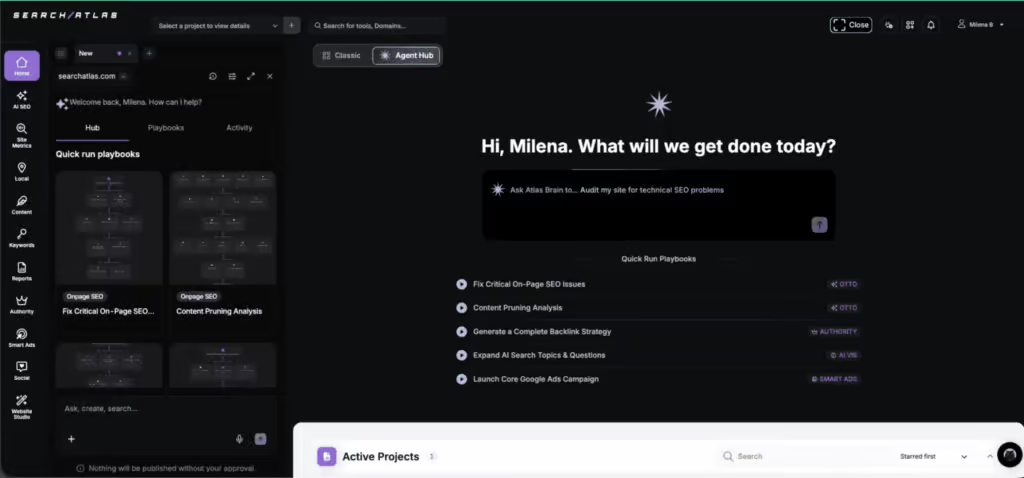
Search Atlas Agent operates as that unified execution layer. Atlas Agent translates defined goals into deployed actions across content, technical SEO, authority, and AI visibility without manual handoffs.
2. Define Clear Objectives
Agentic SEO depends on clear, measurable objectives.
Agents do not need instructions like “update this page” or “optimize this keyword.” Agents need defined outcomes that guide how they analyze data and prioritize actions.
Objectives determine how the system interprets signals and decides what to execute. Without them, actions lose focus and fail to connect to business impact.
Set objectives tied to measurable outcomes:
- Increase traffic across a topic cluster.
- Recover declining rankings or pages.
- Expand visibility inside AI-generated answers.
- Improve indexation and crawl coverage.
These objectives act as operating instructions. They define what success looks like and how the system allocates effort across opportunities.
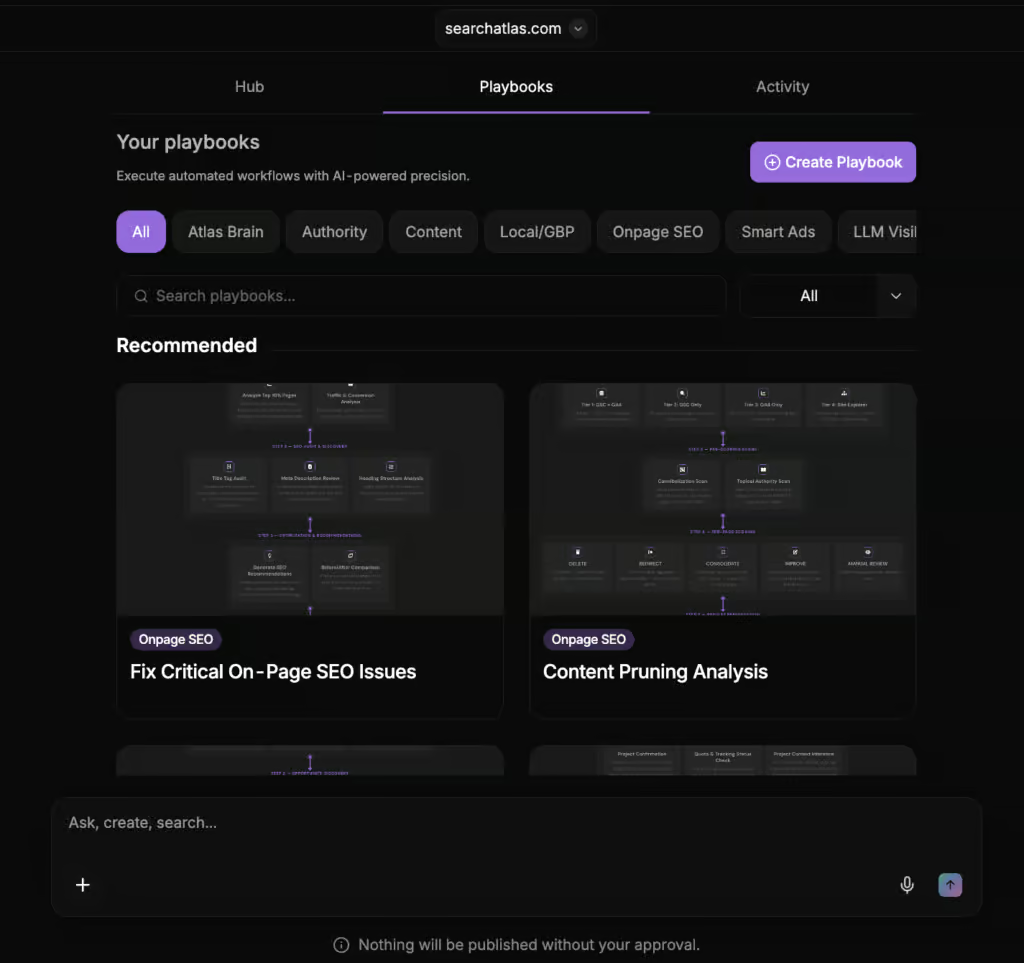
Inside Atlas Agent, objectives connect directly to execution through natural language commands or structured Playbooks. You can select a pre-built Playbook that packages workflows, logic, and rules into repeatable execution systems.
3. Configure Guardrails and Autonomy Levels
Agentic SEO introduces speed and scale, which makes control essential. Agents can execute changes across hundreds or thousands of pages within minutes. This capability increases efficiency but increases risk at the same time.
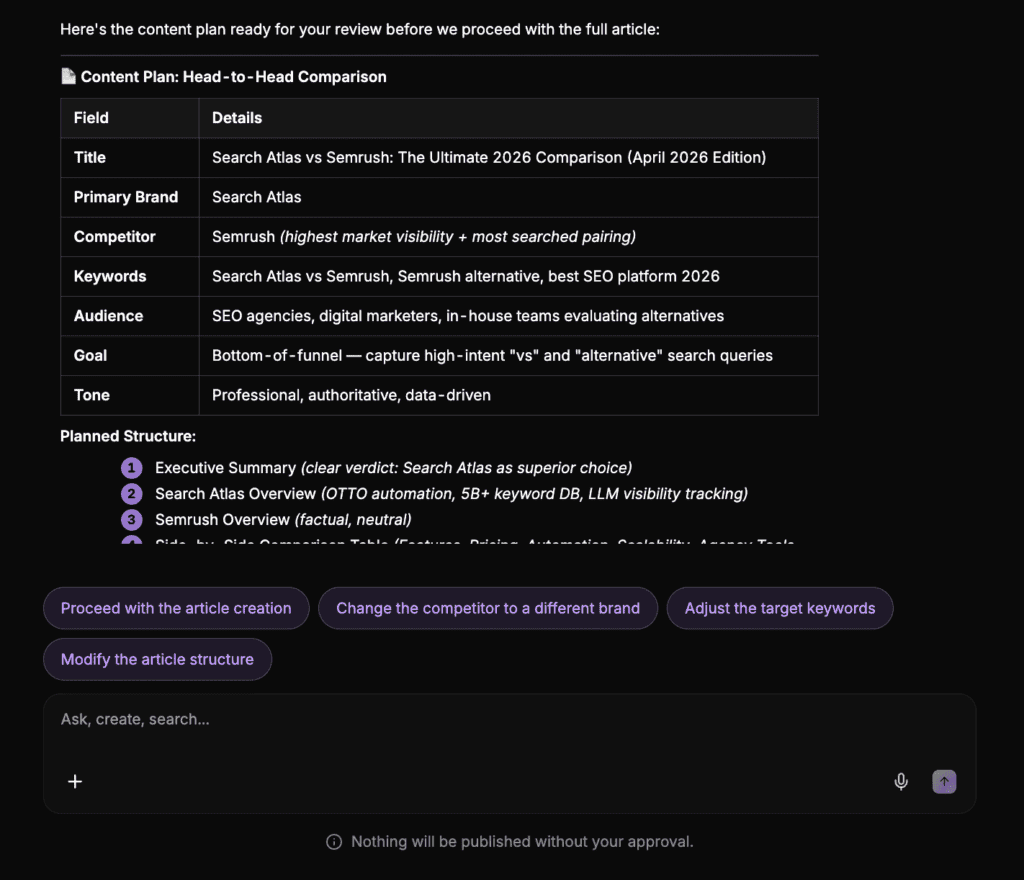
Guardrails define how far autonomy extends and where human oversight applies. Structure autonomy by risk level:
- Low-risk actions run fully autonomous: Internal linking, schema deployment, metadata updates.
- Medium-risk actions run with review layers: Content updates, title changes, structural adjustments.
- High-risk actions require approval: Brand messaging, regulated content, critical pages.
This structure balances speed with control. Execution remains fast, while quality, compliance, and brand consistency remain protected.
4. Connect Data and Execution Systems
Agents make decisions based on live signals. They need access to the systems where those signals exist and the systems where changes are applied. Without that connection, the system cannot operate effectively.
Connect core systems into a unified workflow:
- GSC for rankings and query data.
- GA4 for traffic and engagement signals.
- CMS for direct content and page updates.
- Crawl data for technical insights and site health.
- AI visibility tools for citation tracking and entity presence.
Disconnected systems break the execution loop because data and action exist in separate environments. Connected systems allow agents to detect issues and act immediately.
This integration defines the difference between AI tools and agentic systems. AI tools generate outputs. Agentic systems execute them.
5. Monitor Outcomes and Adjust Strategy
Agentic SEO runs continuously, but performance still requires oversight and refinement.
The system executes actions and measures results automatically. Monitoring ensures those actions align with business goals and produce measurable impact across search and AI visibility. Track performance across key signals:
- Ranking movement and overall search visibility.
- Traffic growth and engagement trends.
- AI answers citations and entity presence across LLMs.
- Indexation, crawl health, and technical stability.
Monitoring is not just reporting. Monitoring feeds the system with the data required to improve future decisions. Outcome data becomes the input for the next execution cycle, which allows strategies to evolve based on performance instead of assumptions.
Search Atlas centralizes this process by connecting Agentic SEO monitoring and execution inside one system. Inside Search Atlas, performance tracking runs across multiple layers:
- Rank tracking monitors keyword movement across locations and devices.
- Site Explorer and Site Audit analyze traffic, engagement, backlinks, and technical SEO health.
- LLM Visibility tracking measures how the brand appears inside AI-generated answers.
- Report Builder consolidates performance into structured insights tied to business outcomes.
Execution improves through OTTO SEO, which acts on these signals automatically. OTTO SEO identifies technical issues, content gaps, and optimization opportunities, then deploys fixes directly across the site without manual workflows.
Video Player
https://searchatlas.com/wp-content/uploads/2025/12/Otto-Seo-Animation-V03.m4v
00:00
00:00
01:28
[Use Up/Down Arrow keys to increase or decrease volume.
](javascript:void(0);)
This connection between monitoring and execution closes the feedback loop. The system detects changes, applies updates, measures results, and refines the next set of actions continuously.
The operator role shifts from executing tasks to interpreting performance and adjusting system direction. Execution remains automated, while strategy evolves based on real-time data.
For a complete step-by-step onboarding process for agentic marketing systems, see the Beginner’s Guide to Getting Started with Agentic Marketing, which covers setup, system configuration, and first execution in detail.
How to Define Goals, Guardrails, and Approval Tiers
Agentic SEO works only when goals, guardrails, and approval tiers are clearly defined. These elements control how SEO agents prioritize actions, what they are allowed to execute, and how risk is managed at scale.
How Are Agentic SEO Goals Defined?
Agentic SEO goals are defined as measurable objectives tied to a specific scope, metric, and time frame. A clear goal tells the system what to optimize, how success is measured, and how fast results need to be achieved.
Vague goals create inconsistent execution. Specific goals produce targeted actions. A working goal includes four elements:
- Scope: cluster, page set, market, or AI surface.
- Metric: ranking, traffic, indexation, or citation rate.
- Target: defined improvement level.
- Time frame: clear deadline.
Examples:
- Increase indexation coverage on the product cluster from 78% to 95% within 30 days.
- Raise AI Overviews citation rate on the comparison cluster from 12% to 30% within 60 days.
Goals act as operating instructions. Agents use them to decide what to analyze, what to prioritize, and what actions to execute first.
What Guardrails Should Every Agentic SEO Program Enforce?
Guardrails define the boundaries agents operate within. They ensure that execution remains aligned with brand, compliance, and search guidelines while running at scale. Without guardrails, autonomous systems can apply incorrect patterns across large parts of the site.
There are 5 core guardrail categories in production systems:
- Brand and tone rules: Control how content is written and ensure consistency with voice and messaging.
- Compliance rules: Block restricted claims, enforce disclaimers, and protect regulated content.
- Link pattern rules: Prevent over-optimization and unnatural anchor distributions.
- Page-type exclusions: Protect sensitive areas such as legal pages, pricing pages, and YMYL content.
- Rate limits: Control how many changes can be applied per page or cluster within a defined period.
How Are Approval Tiers Structured?
Approval tiers define how different types of actions are reviewed before deployment. They balance execution speed with risk control.
Actions are grouped into three tiers based on impact:
- Low-risk tier. Runs autonomously. Includes alt text updates, schema additions, internal linking, broken link fixes, and minor metadata changes.
- Medium-risk tier. Runs with partial review. Includes title tag rewrites, meta description updates, content section refreshes, and canonical adjustments.
- High-risk tier. Requires full approval before deployment. Includes full page rewrites, regulated content updates, pricing pages, YMYL pages, and brand messaging.
An approval matrix defines how each action type is handled in practice. It removes ambiguity by mapping execution rules to specific actions.
Each action is assigned:
- A risk tier
- A reviewer
- A sampling rate
- A maximum batch size
Example:
- Schema additions run autonomously with a 5 percent audit sample.
- Title tag rewrites run with reviewer approval on 20 percent of actions.
- Full rewrites of YMYL pages require named SEO and legal approval before publication.
The matrix sits alongside the guardrail framework and evolves as confidence in agent behavior increases.
What Problems Does Agentic SEO Solve?
Agentic SEO solves the core execution challenges in modern search. It connects strategy to continuous action, removes delays, enables real-time optimization, and maintains visibility across search engines and AI answer systems.
There are seven core problems that agentic SEO solves.
1. Removes the Lag Between Insight and Action
Traditional SEO separates analysis from execution. Teams identify issues in reports, create briefs, assign tasks, and wait for deployment cycles.
Agentic SEO removes this delay. Systems detect issues and apply fixes immediately.
Page-level problems such as broken canonicals, outdated content, or missing schema get resolved as soon as signals appear. This prevents issues from compounding across the site.
2. Replaces Reactive Reporting with Real-Time Optimization
Once execution becomes immediate, the role of reporting changes.
Traditional workflows rely on historical data, where teams analyze performance after changes occur. In fast-moving environments, this delay limits the ability to respond effectively.
Agentic SEO operates on live signals. Systems monitor rankings, indexation, and AI visibility continuously and adjust optimization as conditions change. This turns SEO from reactive reporting into real-time execution.
3. Scales SEO Without Scaling Headcount
Large sites generate thousands of optimization opportunities across pages, categories, and markets. Expanding coverage traditionally requires more people to handle the workload.
Agentic SEO removes this dependency. Autonomous AI SEO agents execute across large inventories in parallel, which allows optimization to scale without proportional increases in resources.
4. Eliminates Tool Fragmentation
Traditional SEO relies on disconnected tools. Crawlers, rank trackers, analytics platforms, CMSs, and reporting tools operate separately.
This fragmentation creates delays and inconsistencies. Data must be exported, combined, and interpreted manually before action is taken.
Agentic SEO unifies these layers. Data, decision-making, and execution operate inside one environment, which removes friction between insight and action and allows the system to operate continuously.

5. Maintains Continuous Improvement Through Outcome Learning
Traditional optimizations are static. Pages are updated, then left unchanged until the next audit cycle. Agentic SEO introduces continuous improvement. Systems track the impact of every action, measure performance changes, and refine future decisions based on results.
Optimization becomes an ongoing process that adapts instead of decaying.
6. Operates Across AI Answer Surfaces, Not Just Search Results
Search visibility now extends beyond traditional rankings. Search now includes AI-generated answers where content is selected, summarized, and cited based on structure and entity signals. Each system applies a different extraction logic.
Agentic SEO accounts for this shift. It tracks presence across AI surfaces and adjusts content structure, schema, and signals to maintain visibility where users interact with information.
7. Closes the Gap Between Strategy and Execution
In most environments, strategy defines what should be done, but execution depends on workflows, approvals, and coordination. This separation creates delays and inconsistencies.
Agentic SEO connects strategy directly to execution. A defined goal triggers actions across pages immediately, using the same logic across the entire system.
Which Technologies and Tools Power Agentic SEO?
Agentic SEO operates through a defined stack of AI, data, and automation systems that allow autonomous agents to observe signals, decide actions, and execute work across websites and AI surfaces.
-
Large language models (LLMs) are the reasoning layer. Models such as GPT, Gemini, and Claude interpret search intent, classify queries, evaluate content quality, generate structured outputs, and convert performance signals into executable actions. As of 2026, frontier models reason well enough to handle multi-step SEO decisions inside agent workflows.
-
Search and analytics APIs are the data layer. GSC, GA4, Bing Webmaster Tools, log files, server-side analytics, and crawl data feeds supply impressions, clicks, indexation status, and engagement signals that drive agent decisions in real time.
-
Workflow orchestration systems sequence agent activity. Frameworks such as n8n, Apache Airflow, and custom agent pipelines coordinate monitoring, analysis, decision-making, execution, and validation tasks across specialized agents without manual stitching.
-
SEO execution platforms apply changes at scale. They handle CMS writes, internal linking deployment, schema markup, metadata updates, content publishing, and re-crawl submission so agents can implement decisions consistently across thousands of URLs.
-
AI visibility and evaluation tools track presence inside AI-generated answers. Tools such as the Search Atlas LLM Visibility Tool monitor citations, mentions, and entity inclusion across LLM outputs alongside traditional rankings, allowing agents to validate whether AI surface changes match search outcomes.
What Are the Main Advantages of Agentic SEO?
The main advantages of agentic SEO relate to scalability, execution speed, operational consistency, signal responsiveness, and cost structure across large search environments.
These advantages become more visible as websites grow in size, complexity, and exposure across both traditional search and AI-driven surfaces.
There are 5 main advantages of agentic SEO:
1. Scalability Across Large Site Inventories: Autonomous agents operate without human throughput limits, which allows small teams to manage large websites, marketplaces, and multi-market environments without increasing headcount.
2. Continuous Execution and Faster Response: Monitoring, analysis, and execution operate in the same loop, which allows changes to be applied as soon as new signals appear. Performance stays aligned with real-time search conditions.
3. Operational Consistency Across the Portfolio: Predefined logic, templates, and validation controls ensure that every page follows consistent optimization standards, which removes variation from manual workflows.
4. Higher Leverage from SEO Effort: Repetitive work, such as metadata updates, internal linking, content refreshes, and technical fixes, is handled by agents. Teams focus on strategy, system design, and performance improvement.
5. Lower Marginal Cost at Scale: Once agents and integrations are in place, expanding coverage across pages, keywords, and AI surfaces requires minimal additional resources. Growth depends on systems, not headcount.
What Are the Limitations and Risks of Agentic SEO?
The limitations of agentic SEO relate to data dependency, governance requirements, risk amplification, brand sensitivity, and organizational readiness. Autonomous execution at scale magnifies the consequences of weak inputs or unclear rules.
There are 5 main limitations and risks of agentic SEO:
1. Heavy dependence on data quality. Agents act on signals from GSC, GA4, crawlers, and SERP monitors. Delayed, incomplete, or noisy data leads to incorrect decisions applied across thousands of pages.
2. Need for governance and rollback layers. Autonomous systems require approval logic, validation checkpoints, anomaly detection, and rollback paths. Without them, a single flawed rule can break internal linking, publish off-brand content, or apply technical changes that conflict with business priorities.
3. Risk amplification through automation. Agentic systems propagate decisions faster than human review cycles. A misinterpreted signal scales system-wide before anyone sees the report.
4. Limited brand and compliance nuance. Agents struggle with regulated language, legal sensitivity, and brand voice subtleties. Human review remains required for high-stakes content, regulated industries, and reputation-sensitive surfaces.
5. High initial setup complexity. Agentic SEO requires a clean data infrastructure, integrated tools, defined governance, and cross-team coordination. Organizations without mature SEO processes face slower adoption and higher implementation risk.
These limitations define where human supervision remains necessary. They set the boundaries within which agents operate safely at scale.
How Are Agentic SEO Risks Managed in Practice?
Agentic SEO risks are managed through controlled autonomy, validation layers, and clear governance rules. These elements define what agents can execute, how decisions are verified, and when human oversight is required.
Uncontrolled systems scale errors. Controlled systems scale execution.
Risk control starts with limiting what agents are allowed to do.
Each action runs inside defined permissions based on type, scope, and impact. This prevents a single incorrect decision from affecting large parts of the site.
Core controls include:
- Action limits: Define what agents can change.
- Rate limits: Control how many changes apply per page or cluster.
- Scope boundaries: Restrict actions to specific sections or page types.
These constraints define the execution space where agents operate safely.
How Is Execution Monitored and Reversed?
Every action needs to be visible and reversible. Agentic SEO systems track all changes and measure their impact in real time. This creates accountability and allows fast correction when needed. Core monitoring controls:
- Audit logs: Record every change and action taken.
- Performance tracking: Measure ranking, traffic, and visibility impact.
- Rollback systems: Revert changes if results do not meet expectations.
This layer ensures that execution remains controlled even at scale.
How Is Success Measured in an Agentic SEO Strategy?
Success in agentic SEO is measured by how well the system executes, adapts, and maintains visibility across both search engines and AI-driven answer systems. Rankings still matter, but they are no longer enough. Performance now depends on speed, consistency, and presence across multiple surfaces.
1. Intent Alignment Stability: Intent alignment shows whether pages match what users are actually searching for. This metric tracks how consistently content aligns with dominant and emerging intent patterns over time. Stable alignment indicates that the system adapts as intent shifts, not after it changes.
2. Indexation and Crawl Efficiency: Technical health determines whether content can be discovered and maintained. This metric tracks crawl coverage, crawl frequency, index freshness, and error reduction. Strong SEO performance shows that the system maintains technical SEO automatically without manual intervention.
3. Content Freshness and Decay Prevention: Content performance depends on staying relevant. This metric measures how effectively pages are refreshed as signals change. Systems that maintain freshness prevent ranking loss and sustain visibility across both evergreen and dynamic content.
4. Internal Linking Coherence: Internal linking defines how authority flows across the site. This metric evaluates link distribution, topical clustering, and orphan page recovery. Strong coherence indicates that the system reinforces structure and supports discoverability across all pages.
5. Execution Latency: Execution latency measures how fast the system reacts. It tracks the time between signal detection and corrective action. Lower latency means the system responds immediately instead of waiting for scheduled workflows. Speed becomes a competitive advantage in environments where rankings and AI surfaces shift continuously.
6. AI Visibility and Citation Presence: Visibility now extends beyond rankings. This metric tracks how often a brand appears inside AI-generated answers, including citations, mentions, and entity inclusion across systems like ChatGPT, Gemini, Claude, Perplexity, and AI Overviews. Higher citation frequency indicates a stronger presence in AI-driven search environments.
7. Operational Efficiency and Cost per Action: Efficiency defines how well the system scales. This metric measures how many optimizations are executed per unit of time or cost. As systems improve, cost per action decreases while output increases.
Which Industries Benefit Most From Agentic SEO?
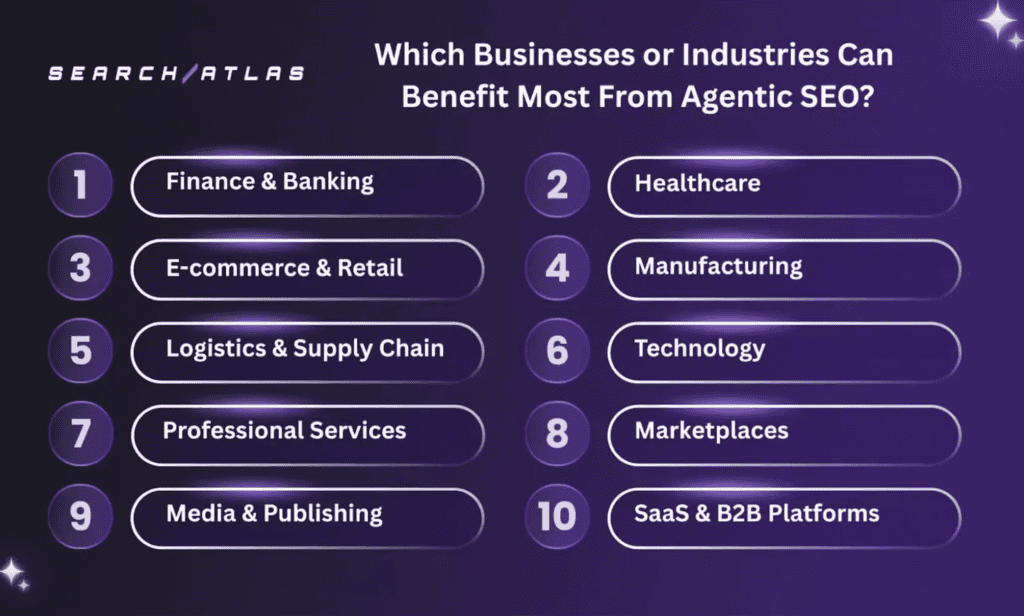
Industries benefit most from agentic SEO when scale, speed, and continuous change exceed what manual execution can sustain. High-impact environments share three traits: large content inventories, frequent intent shifts, and ongoing customer interaction across multiple search surfaces.
These conditions create constant optimization demand. Autonomous systems handle that demand by executing continuously, adapting to real-time signals, and maintaining visibility across both traditional search and AI-driven environments.
There are 10 industries where the agentic SEO model delivers the highest impact:
1. Finance and Banking: High-stakes content requires accuracy, compliance, and constant updates. Product pages, comparisons, and educational content must stay aligned with evolving regulations and intent patterns.
2. Healthcare: Content spans conditions, treatments, and local services. Pages require continuous updates to maintain accuracy, relevance, and compliance while supporting location-based visibility.
3. E-commerce and Retail: Large product catalogs, seasonal demand, and inventory changes create constant optimization needs. Continuous execution keeps listings, categories, and metadata aligned with search demand.
4. Manufacturing: Complex product structures and technical documentation require structured content and strong internal linking. Continuous optimization maintains discoverability across deep hierarchies.
5. Logistics and Supply Chain: Search demand shifts based on routes, regions, and market conditions. Dynamic service pages require constant updates to match demand patterns and geographic intent.
6. Technology and SaaS: Fast product cycles and competitive landscapes demand high content velocity. Feature pages, updates, and comparisons require continuous optimization to maintain visibility.
7. Professional Services: Location-based pages and service descriptions must align with regional demand. Continuous optimization ensures consistent performance across multiple markets.
8. Marketplaces: Multi-sided platforms generate dynamic inventory and user-driven content. Continuous execution maintains structure, linking, and visibility across constantly changing pages.
9. Media and Publishing: Large content archives experience ongoing decay. Real-time updates and optimization maintain visibility across both search rankings and AI-driven content extraction.
10. B2B Platforms: Long sales cycles require coverage across multiple buyer stages. Feature pages, integrations, and comparison content must stay aligned with evolving intent.
Agentic SEO delivers the highest impact in environments where scale, speed, and continuous adaptation exceed what human execution can sustain.
How Should Organizations Prepare to Implement Agentic SEO?
Organizations prepare for agentic SEO by setting the system before turning it on. Execution becomes autonomous, so inputs, rules, and boundaries must be clear from the start. Strong preparation turns speed into an advantage instead of a risk.
Start with data. Agents act on signals, not assumptions. GSC, GA4, crawl data, and AI visibility tracking need to be connected and consistent. The CMS needs to allow direct writes. Clean, real-time data keeps decisions accurate and prevents errors from scaling.
Define objectives next. The system runs on outcomes, not tasks. A working goal ties scope, metric, target, and time frame. Clear goals focus execution, guide prioritization, and connect actions to business impact. Vague goals dilute results.
Set governance before execution. Permission boundaries define what agents can change. Validation rules confirm signals before action. Approval thresholds control medium and high-risk updates. Rollback mechanisms allow fast reversal. Control does not slow the system. Control keeps it safe at scale.
Adjust team roles. Repetitive execution moves to agents. Human work shifts to system design, intent modeling, brand and compliance rules, and performance evaluation. The team stops managing tasks and starts managing how the system operates.
Roll out in phases. Start with limited scope and lower-risk pages. Observe outcomes across multiple cycles. Expand coverage and autonomy only after the system shows stable behavior. Gradual rollout builds confidence and prevents large-scale errors.
Preparation defines performance. Clean data, clear goals, firm governance, and phased rollout create the conditions where agentic SEO runs continuously and reliably.
How Scalable Is Agentic SEO Across Multiple Websites or Campaigns?
Agentic SEO scales across multiple websites and campaigns by running the same optimization system across all properties at once. Once the setup is in place, adding more sites or campaigns does not require rebuilding workflows or expanding teams.
Scalability comes from reuse. The same agents, rules, and workflows apply across every domain, page set, or market. Each property feeds its own data into the system, but execution follows the same logic. This allows one setup to manage multiple websites, international SEO programs, or large campaign portfolios at the same time.
Growth changes how much data the system processes, not how the work is done. Adding more websites increases signals and execution volume, but the optimization loop remains the same. The system continues to detect issues, apply changes, and measure results without adding new layers of coordination.
Consistency strengthens scalability. The same templates, validation rules, and constraints apply across all properties. This removes variation between teams, vendors, or processes and keeps execution aligned across the entire portfolio.
Monitoring keeps everything connected. Performance is tracked across all sites and campaigns in real time. Underperforming pages or properties are identified quickly, and adjustments happen without stopping execution or reallocating resources.
Scalability in agentic SEO comes from repetition and control. Once the system is defined, expansion becomes a matter of adding inputs, not increasing effort.
Agentic SEO Defines the Evolution of Search Optimization
Agentic SEO defines the next stage of search optimization by turning strategy into continuous execution. Instead of stopping at insights or recommendations, the system applies changes and improves performance in real time.
For years, SEO tools showed what to fix but left the execution manual. That gap slowed results and limited scale. Agentic systems remove that friction by connecting data, decisions, and deployment into one continuous loop.
Goals turn into live updates within minutes. Content, technical fixes, internal linking, and AI visibility adjustments deploy without waiting for workflows. Performance keeps evolving as signals change. Expansion no longer requires rebuilding processes or increasing coordination.
Execution now depends less on coordination and more on having a system that can operate, adapt, and deploy changes continuously.
Run agentic SEO with Search Atlas. Start your free trial today!
Agentic SEO FAQ
What is agentic SEO?
Agentic SEO is a search optimization model where autonomous AI agents plan, execute, and improve SEO continuously. Instead of producing recommendations, the system applies changes across content, technical SEO, internal linking, schema, and AI visibility in real time.
How is agentic SEO different from traditional SEO?
Agentic SEO runs as a continuous execution system. Traditional SEO separates analysis and implementation into workflows and cycles. Agentic SEO connects data, decisions, and deployment into one loop that adapts as search and AI surfaces change.
Does agentic SEO replace SEO professionals?
No. It changes how SEO is done. Manual execution shifts to agents, while people focus on strategy, system design, governance, and performance evaluation. Teams define direction. The system executes it.
How does agentic SEO relate to agentic AI?
Agentic AI refers to systems that can analyze, decide, and act autonomously. Agentic SEO applies that capability to search optimization by using agents to manage technical SEO, content, linking, and AI visibility continuously.
Can agentic SEO improve AI visibility?
Yes. Agentic systems track citations, mentions, and entity presence across platforms like ChatGPT, Gemini, Claude, Perplexity, and AI Overviews. When gaps appear, the system adjusts content structure, schema, and signals to improve visibility and monitors the impact continuously.
What does it cost to deploy agentic SEO?
Cost depends on scope, integrations, and system complexity. Most implementations range from mid four figures to low six figures annually. Efficiency increases as scale grows, since execution expands through systems rather than additional labor.
Is agentic SEO more cost-effective than traditional SEO?
Yes, at scale. Automation reduces the cost of monitoring, analysis, and execution, which lowers the marginal cost of optimizing additional pages, websites, or campaigns. Smaller setups see less immediate efficiency until the scope increases.
Is agentic SEO a long-term shift or a temporary trend?
Agentic SEO is a structural shift. Search is moving toward AI-driven discovery and automated evaluation. Optimization follows the same direction, where execution matches the speed and scale of how search systems operate.
Are there real-world examples of agentic SEO in use?
Yes. Production systems already use autonomous agents to monitor signals, execute optimizations, and validate outcomes across large site portfolios.
Platforms like Search Atlas apply these principles in practice, where agents handle technical fixes, content updates, internal linking, and AI visibility tracking within controlled, real-time execution systems.